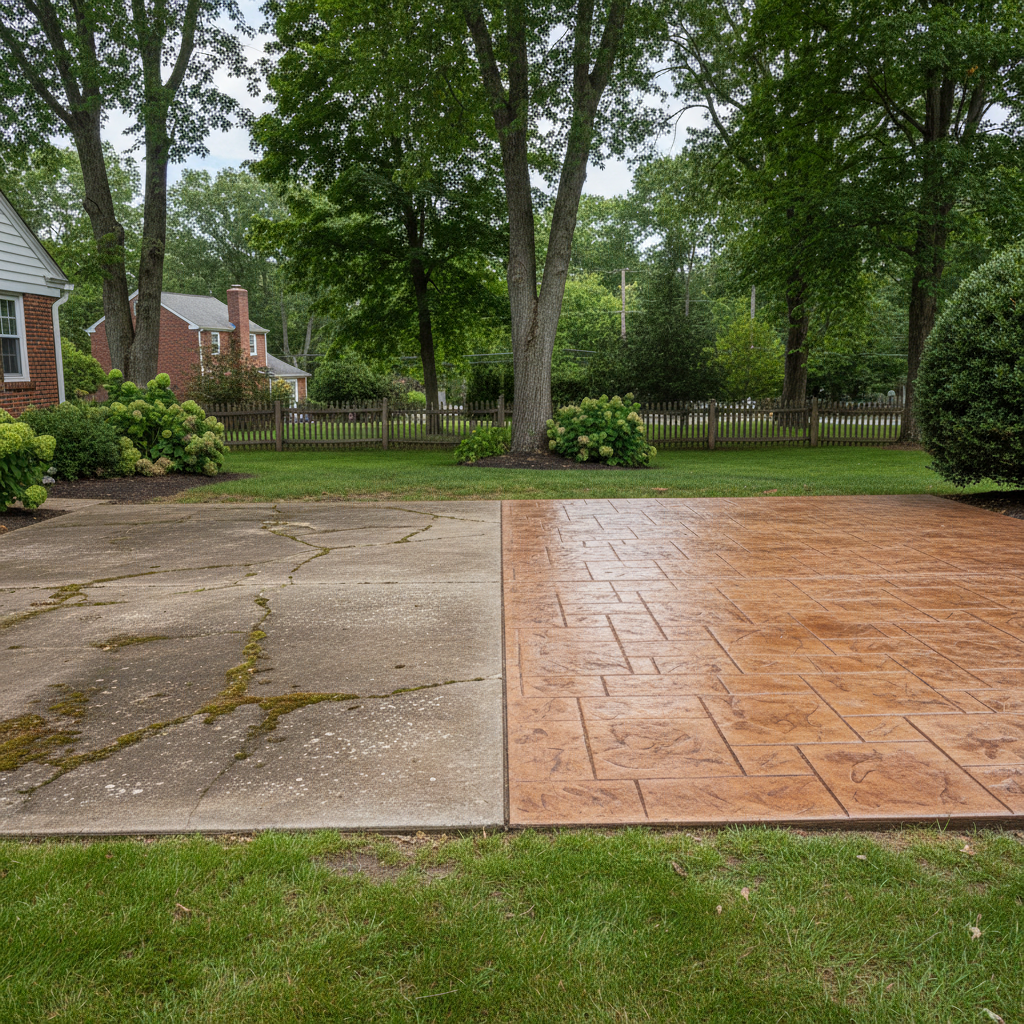
So, you're thinking about sprucing up your outdoor space, right? Maybe a new patio, a walkway, or even just giving that old garage floor a facelift. You've probably heard about decorative concrete, and that's a smart place to start. It's tough, looks great, and can seriously bump up your home's curb appeal. But then you start digging a little, and terms like 'stamped' and 'stained' concrete pop up. What's the real difference? And, more importantly, which one makes the most sense for your place here in Needham?
As someone who's poured a lot of concrete around town — from the classic colonial homes in Broadmeadow to the newer builds near Rosemary Lake — I've seen both of these approaches really shine. And, honestly, I've seen them fall short, too, if they weren't the right fit for the job. Let's talk about what you really need to know.
Stamped Concrete: That High-End Look Without the High-End Price
Stamped concrete is all about making concrete look like something else. Think natural stone, brick, wood planks, or even slate. We pour fresh concrete, and then, while it's still wet, we press large, flexible mats — we call them stamps — right into the surface. These mats have patterns and textures that perfectly mimic those other materials. We can also mix color into the concrete itself, or use a color hardener on the surface before stamping. That's how we get a really authentic look.
The Good Stuff:
- Looks: This is where stamped concrete truly shines. You can get incredibly realistic textures and patterns. Want a cobblestone patio but without the unevenness or the weeds? Stamped concrete delivers. It's a fantastic way to get that high-end feel.
- Toughness: It's still concrete, after all, so it's super strong and built to last. When we install it correctly and seal it properly, it handles our New England weather cycles like a champ — all that freezing and thawing, plus the heavy snow.
- Value: You get the beautiful look of expensive materials like natural stone or pavers, but at a fraction of the cost. That goes for both the initial installation and the long-term upkeep.
The Not-So-Good Stuff:
- Cost: Generally, stamped concrete costs more upfront than stained concrete. There's just more labor involved, specialized tools, and often more material, like those color hardeners.
- Installation: This isn't a DIY project, not even for a homeowner who's pretty handy. The timing is absolutely critical; you have to stamp it when the concrete is just right. Miss that window, and you've got problems.
- Repairs: If a section gets damaged, trying to match the pattern and color perfectly can be a real headache.
Stained Concrete: Color, Character, and Keeping Costs Down
Stained concrete is a totally different animal. Here, we're not changing the concrete's texture; we're changing its color. We apply either a chemical stain (acid-based) or a water-based stain to an existing or newly poured concrete slab. Acid stains react with the minerals in the concrete, creating these cool, translucent, marble-like effects with lots of variation. Water-based stains, on the other hand, sit on the surface and give you a wider range of solid, opaque colors.
The Good Stuff:
- Cost: Stained concrete is usually less expensive than stamped concrete. The materials are generally cheaper, and the application process isn't as labor-intensive.
- Flexibility: You can stain existing concrete! That's a huge plus if you're just looking to refresh an old patio or a basement floor without tearing everything out.
- Unique Look: Especially with acid stains, you end up with a one-of-a-kind, mottled, translucent finish. You just can't replicate it. It's not trying to imitate another material; it's making the concrete itself look better.
- Maintenance: Once it's sealed, cleaning it is a breeze.
The Not-So-Good Stuff:
- No Texture: You won't get that three-dimensional texture you see with stamped concrete. It's a flat surface, just with color.
- Color Surprises: Acid stains react differently with every single slab, so the exact final color can be a little unpredictable. That's great if you love uniqueness, but maybe not so much if you're aiming for a very specific, uniform shade.
- Surface Prep: For existing concrete, the surface has to be super clean and totally free of old sealers, paint, or grease. Otherwise, the stain won't soak in right.
So, Which One for Your Needham Home?
Here's my honest take on it:
- If you're putting in a new patio, walkway, or driveway, and you want that high-end look of natural stone, brick, or wood — but without the big cost or maintenance hassles — stamped concrete is probably your best bet. It's incredibly durable for our climate, and the aesthetic payoff is huge. You'll get a lot of compliments on a well-done stamped patio, trust me.
- Now, if you're looking to give an existing concrete surface a new lease on life — maybe a tired old patio, a garage floor, or a basement slab — and you want to add color and character without a massive overhaul, stained concrete is an excellent, cost-effective choice. It's also perfect if you prefer a more subtle, organic, or modern look, rather than something that mimics another material.
For outdoor stuff here in Needham, especially with our freeze-thaw cycles, proper sealing is absolutely, positively critical for both options. It protects the surface from water, UV damage, and wear and tear. At Progressive Concrete Solutions, we make sure that's done right, no matter which decorative route you choose.
Ultimately, it really comes down to your budget, the look you're going for, and whether you're working with a brand new pour or an existing slab. Both are fantastic ways to upgrade your home, but understanding their differences will definitely help you make the right call.