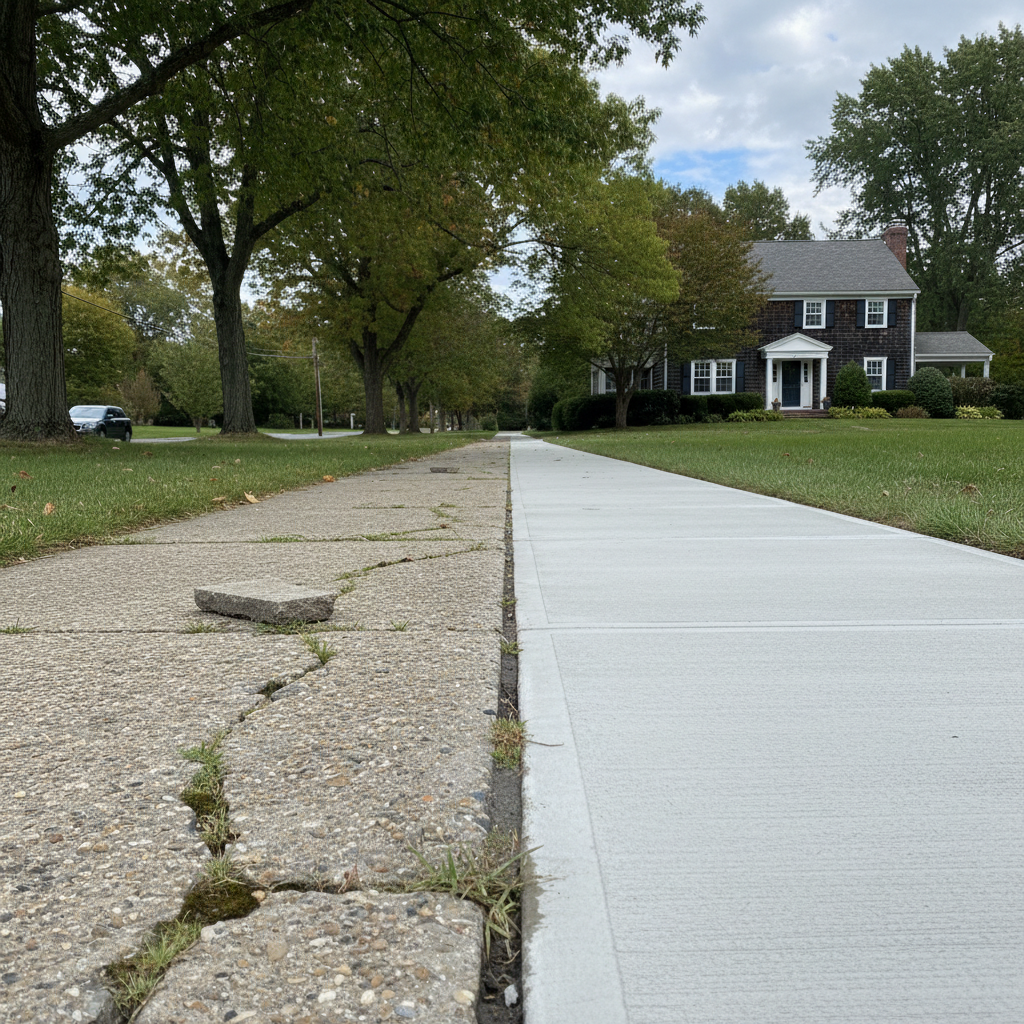
Alright, let's talk sidewalks. You're probably looking to replace that cracked-up path or maybe put in a brand new one. I bet you've seen a few options around Needham. For most folks, it really comes down to two main choices: a good old-fashioned poured concrete slab or those interlocking concrete pavers. As someone who’s been doing this kind of work in town for years, I’ve got some strong opinions and practical advice on both, believe me.
Poured Concrete: The Tried and True
When I say poured concrete, I'm talking about a solid, continuous slab. This is what most people picture when they think "sidewalk." We mix the concrete, pour it right there, screed it, float it, and then finish it. Sounds simple enough, right?
- Cost: Generally, poured concrete is easier on the wallet upfront. It just takes less effort to install than pavers, especially for a straight shot of a path. We can get it done quicker, which, of course, saves you money on the crew's time.
- Durability: A properly installed concrete sidewalk, one with the right base and control joints, is tough. It really can handle our freeze-thaw cycles pretty well. The trick is always proper installation – good drainage, adequate thickness, and a quality concrete mix. If we do it right, it'll last decades.
- Maintenance: Pretty low, actually. Keep it clean, maybe seal it every few years, and you're all set. If a crack does pop up, though, repairing it so it looks seamless can be a real pain. You often end up with a patch that just doesn't quite match the rest.
- Appearance: It's functional. You can get different finishes – a broom finish for grip, smooth, or even some decorative stamping if you want a bit more flair. But mostly, it's a uniform, monolithic look.
- Needham Specifics: I've seen plenty of older concrete sidewalks around Broadmeadow that have held up for 50+ years. But I've also seen some newer ones fail quickly because the base wasn't prepped right for our clay soils, which leads to heaving. You absolutely need a solid, well-draining sub-base here, no question.
Concrete Pavers: The Flexible Alternative
Pavers are individual, pre-cast concrete units that interlock to form a surface. Think of them like a puzzle, in a way. We lay them over a prepared base of gravel and sand.
- Cost: This is where pavers usually get more expensive. The material cost per square foot is higher, and the installation is much more labor-intensive. Each paver needs to be laid individually, leveled, and then the whole thing needs to be compacted and jointed with sand.
- Durability: Excellent, arguably even better than poured concrete in some ways, especially for our climate. Because they're individual units, they can flex and move slightly with the ground's shifting due to freezing and thawing. This flexibility means they're less prone to cracking than a solid slab. If one paver gets damaged, you can just replace that single one.
- Maintenance: Moderate. You'll need to sweep sand back into the joints occasionally, particularly after heavy rains or power washing. Weeds can sometimes sprout between the pavers, requiring treatment. Sealing is also recommended to protect the color and prevent staining.
- Appearance: This is where pavers really shine for many homeowners. You get a huge variety of colors, shapes, and patterns. You can create a really custom, high-end look that's hard to achieve with plain poured concrete. They can mimic natural stone, brick, or create unique geometric designs – quite a difference.
- Needham Specifics: Pavers are fantastic for areas where you know the ground might shift a bit, like near older homes with established tree roots, or in spots with less-than-ideal drainage. Their ability to move with the ground is a real advantage in our New England winters, wouldn't you agree?
So, Which One Should You Choose?
Look, I'm not going to tell you one is universally